
Completed
COVID-19 Food and Nutrition Security Assessment
A household survey in Enugu, Kano and Oyo on how the pandemic affected livelihoods, food access and diets, with a roadmap for more resilient food systems.
Why it matters
Policy needed evidence, fast
Lockdowns, market closures and lost income hit households hard, but there was little data on what it meant for food and nutrition. The assessment filled that gap while the response was still being shaped.
3 states
surveyed across the south-east, north-west and south-west
Source: COVID-19 assessment section, Knowledge Extraction Report, June 2026
Results
What the assessment found and produced
Livelihoods disruptedHouseholds reported lost income and disrupted work.
Food access fellMarket closures and prices made food harder to get.
Diets narrowedDietary diversity declined in surveyed households.
Coping strategies documentedHow families adjusted meals, spending and assets.
Policy recommendationsFor federal and state governments on emergency food security.
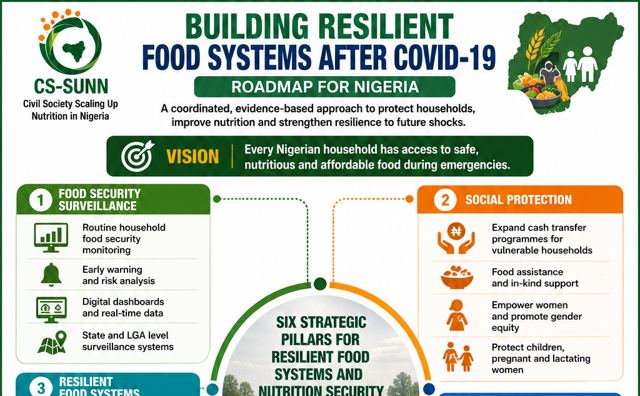
Resilience roadmapA roadmap for stronger food systems after COVID-19.
How we worked
Research built for policy
- Household interviews in three contrasting states.
- Rapid analysis so findings arrived during the response.
- Policy translation into recommendations for government.
- Dissemination to government, partners and humanitarian agencies.
What we learned
Timeliness matters.Evidence is most useful while decisions are being made.
Collaboration improves use.Working across sectors improved the quality and use of findings.
Make assessments routine.Regular household food security monitoring prepares Nigeria for the next shock.
Knowledge products from this project
All resources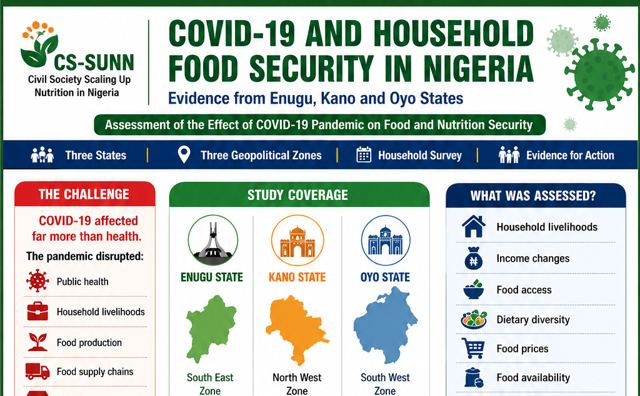
Related projects
Request the data or the full report
For researchers, partners and media interested in the assessment.