
Completed
Women and Girls’ Nutrition (WGN)
Coalition building and policy advocacy that brought female political leaders into nutrition financing and policy, and won better maternity protection.
Why it matters
Women leaders were not being asked
Female legislators and political leaders shape social policy, but were not engaged as nutrition champions. That left a gap between political commitment and budget reality.
490K+
people reached through the social media campaign
Source: Women in Power case study, 2026
Results
What changed
1st national coalitionNigeria’s first national coalition on women and girls’ nutrition.
5 months’ maternity leaveSecured in Nasarawa: 112 working days, plus four months for adoptive parents.
National guidelineNational Guidelines on Women and Girls’ Empowerment on Optimal Nutrition advanced, the first of its kind.
MMS on the essential listAdvocacy for multiple micronutrient supplements on the Essential Medicines List.
Women in Power conferenceFemale leaders, five federal ministries and partners in direct dialogue.
11 advocacy productsDelivered in nine months.
How we worked
Dialogue, not presentations
- Evidence on financing gaps framed every conversation.
- Direct dialogue between leaders, ministries and partners.
- Named champions took commitments back to their institutions.
- Heads of Service were engaged on maternity leave, crèches and nutrition departments.
What we learned
Political champions accelerate reform.Named champions turned agreement into policy.
Partnerships strengthen influence.A coalition carried more weight than any one organisation.
Six months’ paid leave remains the ask.Five months in Nasarawa is a step, not the finish line.
Knowledge products from this project
All resources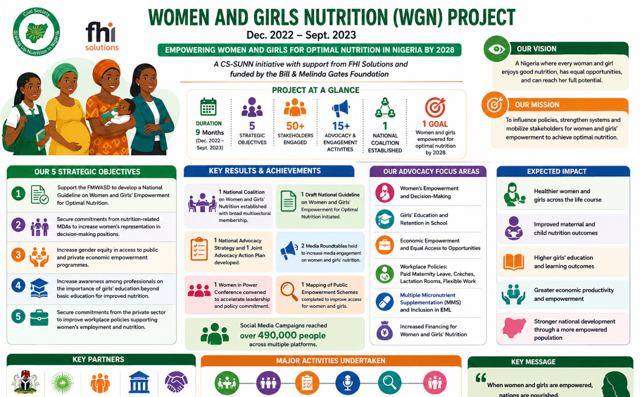
Where this project worked
Related projects
Join the coalition
Organisations working on women and girls’ nutrition can connect with us.